



Things to Do in Hoi An During the April 30 – May 1 Holiday Weekend (2026)
Every year, the April 30-May 1 long weekend draws Vietnamese families and international visitors alike toward Central Vietnam – and Hoi An consistently ranks among the most visited destinations in the region.
According to the People’s Newspaper, the former Quang Nam province (now belongs to Da Nang city) recorded a significant surge in tourist arrivals during both the 2024 and 2025 holiday periods. What draws people to Hoi An is not spectacle but something quieter: a town that presents itself fully even during its busiest days, through lantern-lit streets, riverside markets, and food rooted in generations of local knowledge. This guide covers how to experience Hoi An during the April 30 to May 1 weekend with intention.
Why April 30 – May 1 Is a Special Time to Visit Hoi An
Hoi An is often described by travellers as distinct from other destinations in Vietnam – not because it is quieter or more picturesque, but because daily life here still follows its own rhythm. Local markets, family-run workshops, and neighbourhood streets continue to operate much as they have for generations, creating a sense of continuity that visitors can feel the moment they arrive.
Visiting during the April 30-May 1 holiday carries additional significance for many Vietnamese travellers, as the long weekend coincides with the anniversary of national reunification. Beyond being a public holiday, it is a time when people reflect on history, shared identity, and the country’s journey forward – making trips taken during this period feel more intentional.
From a practical perspective, Hoi An does become slightly busier than usual during this period, largely due to an increase in domestic visitors. Streets, beaches, and popular dining spots see more Vietnamese families and groups travelling together. This can often be minimised by choosing local, family-run eateries, where pricing remains more straightforward and tied closely to everyday life in Hoi An.
Wander the Ancient Town at Its Most Atmospheric
The Hoi An Ancient Town – a famous UNESCO World Heritage Site in Central Vietnam – takes on a particular quality during holiday evenings. Yellow-plastered merchant houses and tiled rooftops that appear in countless photographs look different at 6am or just after sunset, when the light changes and the streets are quieter than the midday rush.
During national holidays, the Assembly Halls – including Phuc Kien (Fujian) and Trieu Chau – are worth visiting. These gathering spaces were built by merchant communities centuries ago and reflect the layered cultural heritage that defines Hoi An’s identity. Visitors are asked to dress modestly, with shoulders and knees covered, as a sign of respect for active places of worship.
Enjoy Lantern Nights and Peaceful Walks by Thu Bon River
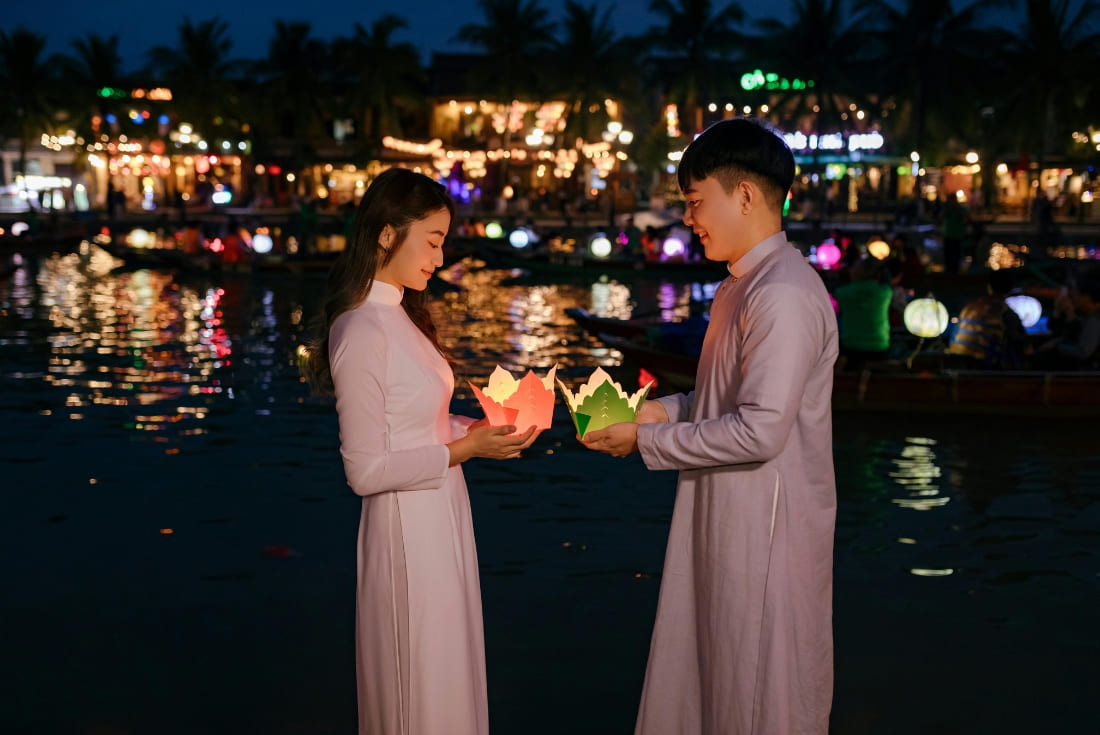
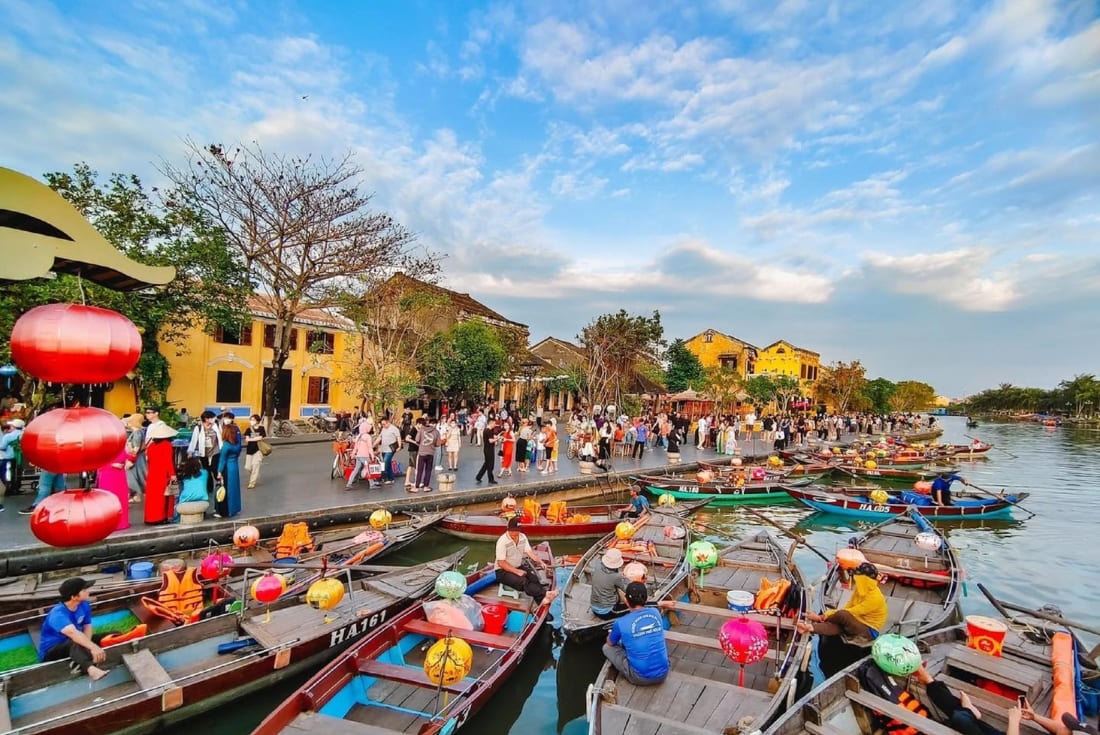
Each evening along the Thu Bon River, paper lanterns are released onto the water – a practice connected to Hoi An’s tradition of wishing and renewal that has continued through both Vietnamese and Cham cultural influences. During the April 30-May 1 weekend, the number of lanterns on the water increases noticeably as more families and visitors participate.
The best vantage points are the low riverside walkways near the Night Market, where candlelight from the lanterns creates soft reflections across the water’s surface. Traditional music – sometimes performed live near the riverbank – completes the setting. Photographers find the period between 6:30pm and 8pm most rewarding, when both natural and lantern light are present, creating depth utilizing different lighting sources. Those documenting the scene are encouraged to observe from the edges rather than wade into the middle of active ceremonies.
Experience Hoi An’s Countryside and Rural Traditions
Approximately 3-5 km outside the Old Town, the landscape changes entirely. Rice paddies, coconut groves, and village pathways replace the tourist corridors – and during the April 30-May 1 long weekend, many local families use the time to return to this slower pace, tending to land and gathering with relatives.
Half-day countryside experiences provide a meaningful counterpoint to the Old Town’s activity. The villages of Cam Thanh and Tra Que are both accessible by bicycle or by boat along the Thu Bon River, and both offer structured activities that connect visitors to the agricultural and artisanal traditions that have sustained Hoi An for centuries. Tra Que and Cam Thanh are consistently recognised among the more authentic rural experiences available within reach of a major Vietnamese heritage town.
Visiting Tra Que Vegetable Village for a Glimpse of Local Life
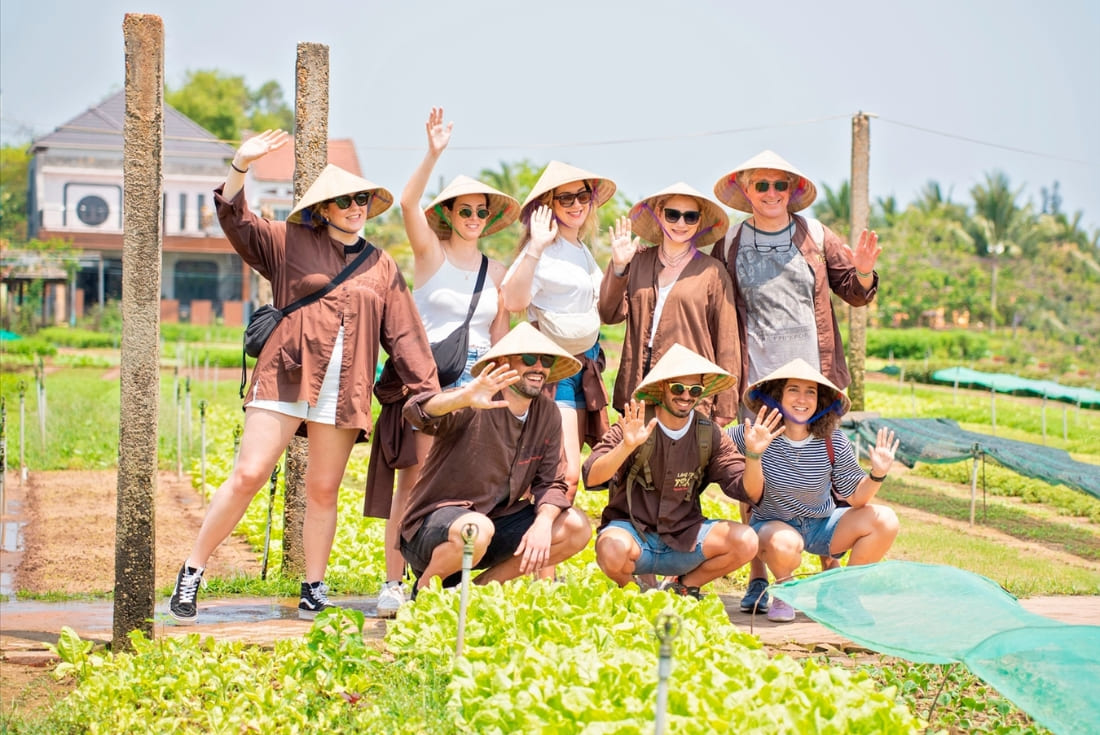
Tra Que, located about 3 km north of the Ancient Town, is an organic farming community that has cultivated herbs and vegetables using seaweed from the nearby Tra Que lagoon as a natural fertiliser for several generations. The result is a fertile farming soil that nurtures the fresh herbs – rau ram, tía tô, húng quế – used in many of Hoi An’s signature dishes.
Visitors can join guided farming sessions that include planting, watering, and harvesting activities alongside local farmers. The experience is more educational than performative: conversations about the connection between the soil, the herbs, and the regional cuisine give travellers a genuine understanding of how Central Vietnamese cooking is built on proximity and seasonal ingredients. Tra Que has been recognised in several Vietnam tourism publications as a model of community-integrated cultural tourism.
Spend a Long Day at Hoi An’s Beaches
Late April and early May mark the beginning of Hoi An’s beach season. The East Vietnam Sea in this period is typically calm, with water temperatures around 28-29°C, light surf, and long stretches of clear sky.
An Bang Beach, approximately 5 km from the Ancient Town, is the most accessible and most visited option during the long weekend. Meanwhile, Cua Dai Beach, slightly further south, is an alternative, though long-term erosion has reduced some of its width over the past decade. For those willing to travel 15-20 minutes north by motorbike or taxi, there’s more secluded beach to visit such as Ha My beach or Thong Nhat beach.
The most practical approach during the April 30-May 1 weekend is to arrive at any beach before 9am or after 3:30pm, when the combination of heat and visitor numbers is at its most manageable.
Savour Vietnamese Cuisine as a Cultural Experience
Holiday travel in Vietnam has always revolved around food and shared meals – and Hoi An is one of the most specific places in the country to explore Central Vietnamese cooking. The regional cuisine here draws from a distinct set of influences: the imperial kitchens respecting royal etiquette of Hue to the North, the spice trade routes that once moved through the ancient port, and the everyday cooking of local households.
Three dishes in particular define Hoi An’s culinary identity.
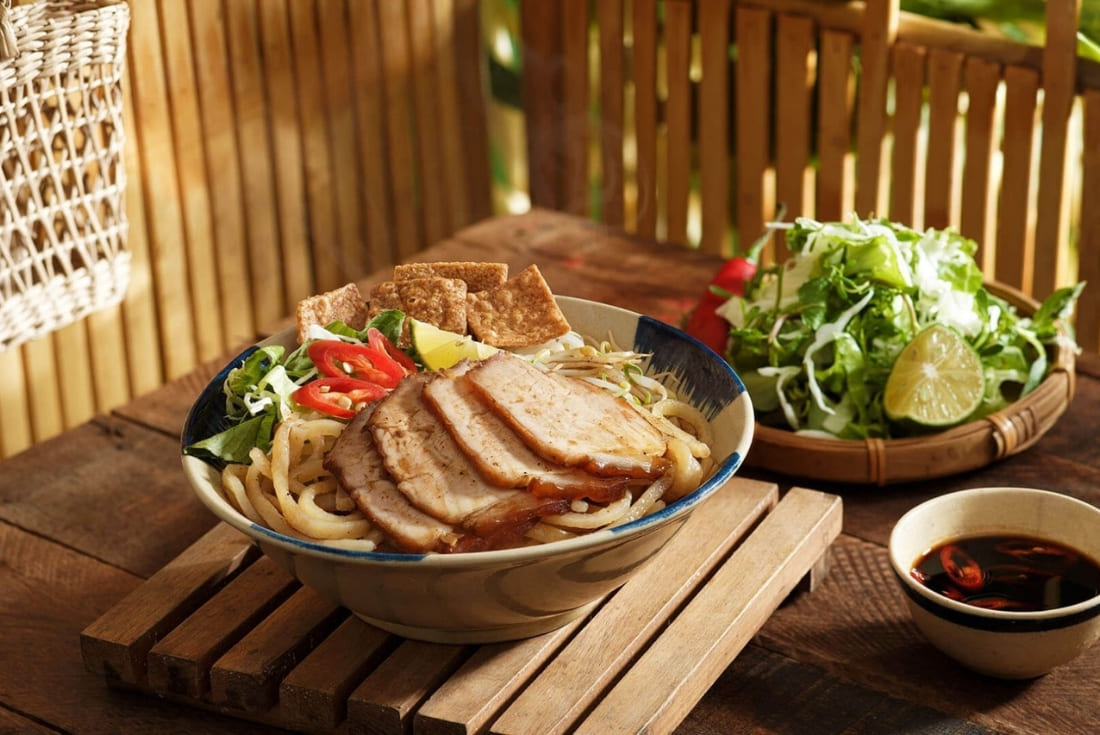
- Cao Lau – thick rice noodles served with slices of pork, crispy croutons, and local herbs – is prepared using water drawn specifically from local wells; versions made elsewhere lack the same mineral quality.
- Mi Quang – turmeric-tinted noodles with shrimp, pork, or chicken in a small amount of concentrated broth – reflects the preference for concentrated flavour over dilution.
- Banh Bao Vac, known in English as white rose dumplings, are thin-skinned rice parcels that require considerable skill to fold correctly and are produced today by only a handful of families in the region.
During the long weekend, local family-run eateries in the streets adjacent to the Old Town – particularly along Tran Phu and Nguyen Thai Hoc – serve these dishes at prices that reflect everyday local dining. For travellers seeking elevated interpretations of these same flavours, several dining venues in Hoi An offer tasting menus that contextualise regional specialties within a more structured culinary setting.
Evening Activities That Capture Hoi An’s Holiday Mood
Hoi An’s evenings during the April 30-May 1 weekend are defined less by nightlife and more by a gentle collective atmosphere. The Hoi An Night Market, on An Hội Island across the bridge from the Old Town, runs from early evening and offers handmade crafts, embroidered goods, and street snacks alongside vendor stalls that have operated in this location for years.
Bai Choi, a traditional singing game with roots in Central Vietnamese folk culture, is performed in several public spaces near the Old Town on most evenings. The experience combining call-and-response song, illustrated cards, and communal participation – is one of the more distinctive cultural offerings in Hoi An and is listed by UNESCO as an Intangible Cultural Heritage of Humanity.
For quieter evenings, rooftop cafés such as Faifo Coffee and Mê Hội An Rooftop Coffee & Kitchen offer views over the Old Town’s tiled roofscape and the Thu Bon River without the noise of the street level below. These spaces suit couples, families with older children, and solo travellers who prefer atmosphere over activity. Lantern-lit streets serve as the backdrop: Hoi An’s evenings lean to slow movement, not urgency.
Practical Tips for Visiting Hoi An During the April 30 – May 1 Holiday
- Timing: The busiest periods are typically midday (11am-2pm) and early evening (6pm-8:30pm).
- Getting there: Da Nang International Airport is the main entry point, approximately 30 km from central Hoi An. Taxis and private transfers make the journey in 35-45 minutes depending on traffic. During the holiday weekend, traffic on the Da Nang-Hoi An road increases; departing Da Nang before 10am or after 7pm helps avoid the peak hour congestion.
- Reservations: For refined dining or set-menu experiences during the long weekend, booking 2-3 days in advance is advisable. Family-run street restaurants generally do not require advance booking, though popular spots fill quickly between 11:30am and 6pm.
- Respectful behaviour: During the April 30th commemoration, some public spaces in Hoi An hold small ceremonies or gatherings. Visitors are welcome to observe; speaking quietly and avoiding photography of commemorative moments without permission are basic courtesies.
- Weather: Late April in Hoi An is typically warm (30-34°C), with low humidity and minimal rain. Sunscreen, a hat, and light breathable clothing are practical necessities for daytime activities.
FAQs: Visiting Hoi An During the April 30 – May 1 Holiday
Is Hoi An crowded during the holiday?
Busier than usual, mostly with domestic travellers. Avoid 10am–4pm in the Old Town and at An Bang Beach; mornings and evenings are noticeably calmer.
Is the weather good in late April?
Reliable sunshine, 26–34°C, low rainfall, and calm seas – one of the better weather windows in Central Vietnam.
Are venues open during the long weekend?
Most remain open, often with extended hours. Some family-run spots may close on the afternoon of April 30th – worth checking ahead.
Is it suitable for families and couples?
Yes to both. Families have beaches, cultural activities, and a walkable Old Town while couples can enjoy lantern evenings and riverside dining.
Should I book restaurants in advance?
For sit-down restaurants and set menus, 2–3 days ahead is advisable. Street food and open-air spots are walk-in.
How does this compare to Tet?
Lighter in tone – businesses stay open, beaches are in season, and the atmosphere leans celebratory rather than ceremonial.
When is the best time to visit the Ancient Town during the April 30–May 1 weekend?Early morning before 8am and evening after 5pm are the quietest windows – crowd density peaks in the middle of the day.
Stay at Wafaifo Resort Hoi An – A Calm Anchor for the Long Weekend
After a day that moves between the Ancient Town, a countryside village, and the coast, having a considered place to return to makes the difference between a tiring trip and a restorative one.
Wafaifo Resort Hoi An is located just a 10-minute walk from Hoi An Ancient Town. The resort features 134 rooms and suites, designed to combine modern comforts with subtle Hoi An-inspired details, creating a stay that feels both contemporary and connected to the city’s heritage.
Guests can expect a range of thoughtful in-room amenities, including:
- High-speed Wi-Fi
- 24-hour room service
- Electronically switchable privacy glass between the bedroom and bathroom
- Anti-steam bathroom mirrors
- Other modern conveniences designed for comfort and ease
Accommodation options range from signature Swim City King/Twin rooms overlooking the resort’s lifestyle pool to spacious suites suited for families, extended stays, or wellness-focused travellers.
The wellness centre offers Hyperbaric Oxygen Therapy (HBOT), NuCalm neuroacoustic therapy, IV therapies, and infrared sauna. Dining options include Coi Nguon for Vietnamese cooking, Xua & Nay for Josper-grilled dishes, and Bang Huu for morning coffee. Airport transfers from Da Nang and valet parking are available on request.
For travelers planning the 26th April – 1st May long weekend (Hung Kings’ Festival, Vietnam’s Reunification Day, to International Labour Day), Wafaifo Resort Hoi An offers more information on room availability and wellness programming via its reservations team.
Contact us here:
- Zalo/WhatsApp: (+84) 888 122 799
- Email us: [email protected]