




What is Faifo: The Forgotten Name of Hoi An and Its Timeless Legacy
Hoi An draws more visitors each year than most cities in Central Vietnam. Its compact Ancient Town – a UNESCO World Heritage Site since 1999 – is one of the few places in Southeast Asia where the physical structure of a trading port from the 15th century has remained largely intact. The lantern-lit streets, the timber shophouses, the assembly halls built by Chinese merchant communities – all of this is still in active use today.
What is less often mentioned is where the name “Hoi An” comes from, and what the town was called before it entered the modern tourism vocabulary. That earlier name – Faifo – carries its own history: a phonetic trace of merchant encounters. This article traces the origins of Faifo, introduces the places in Hoi An that still carry the name today, and explains how Wafaifo Resort Hoi An draws its own identity directly from that heritage.
What is Faifo?
Faifo is the former name of Hoi An – the form used by European traders, missionaries, and cartographers during the town’s peak as an international trading port between the 15th and 19th centuries. The name has been interpreted in several ways. A phonetic rendering of the local Vietnamese pronunciation of the town’s name as heard by foreign merchants, particularly Portuguese and Dutch traders who moved through the port in large numbers. Another interpretation connects it to Chinese pronunciation, as the town served as a significant hub for Chinese merchant communities whose linguistic influence shaped many of Hoi An’s place names, customs, and architectural forms.
The earliest documented Western reference to the name appears in records from 1575, when the Portuguese missionary António de Faria passed through and recorded the settlement as a functioning port. In the centuries that followed, the name Faifo appeared consistently in European maps, maritime logs, and colonial correspondence – a reflection of how central the town was to trade across the South China Sea. Japanese merchants, Chinese traders from Fujian and Guangdong, Dutch and Portuguese vessels, and later French administrators all passed through or established a presence here. The architectural layering of the Ancient Town – narrow shophouses with Japanese roof structures, Chinese clan temples, Vietnamese merchant homes – is the physical record of that exchange.
In 1999, Hoi An Ancient Town was designated as a UNESCO World Heritage Site, recognising the town’s outstanding universal value as an “exceptionally well-preserved example of a South-East Asian trading port dating from the 15th to the 19th century.” The name Faifo has largely faded from contemporary use, but it remains embedded in the town’s identity – surfacing in local businesses, cultural references, and in the name of the resort built to engage with that heritage directly.
Finding Faifo Through Local Experiences
Several businesses in Hoi An have chosen to carry the Faifo name as a deliberate act of cultural grounding – acknowledging the town’s older identity through coffee, cuisine, tailoring, and craft. The four below each offer a different lens on what it means to experience Hoi An through its historical character.
Faifo Coffee
- Address: 130 Tran Phu Street, Old Town, Hoi An, Quang Nam Province
- Opening Hours:
- Monday-Thursday: 8:00 AM-9:30 PM
- Friday-Sunday 7:30 AM-9:30 PM
- Popular Items: Vietnamese egg coffee, salt iced latte, coconut coffee, house-roasted drip coffee
- Vibe: Three-storey antique shophouse with open-air rooftop; dark timber interiors, warm lighting, lantern-hung stairwell
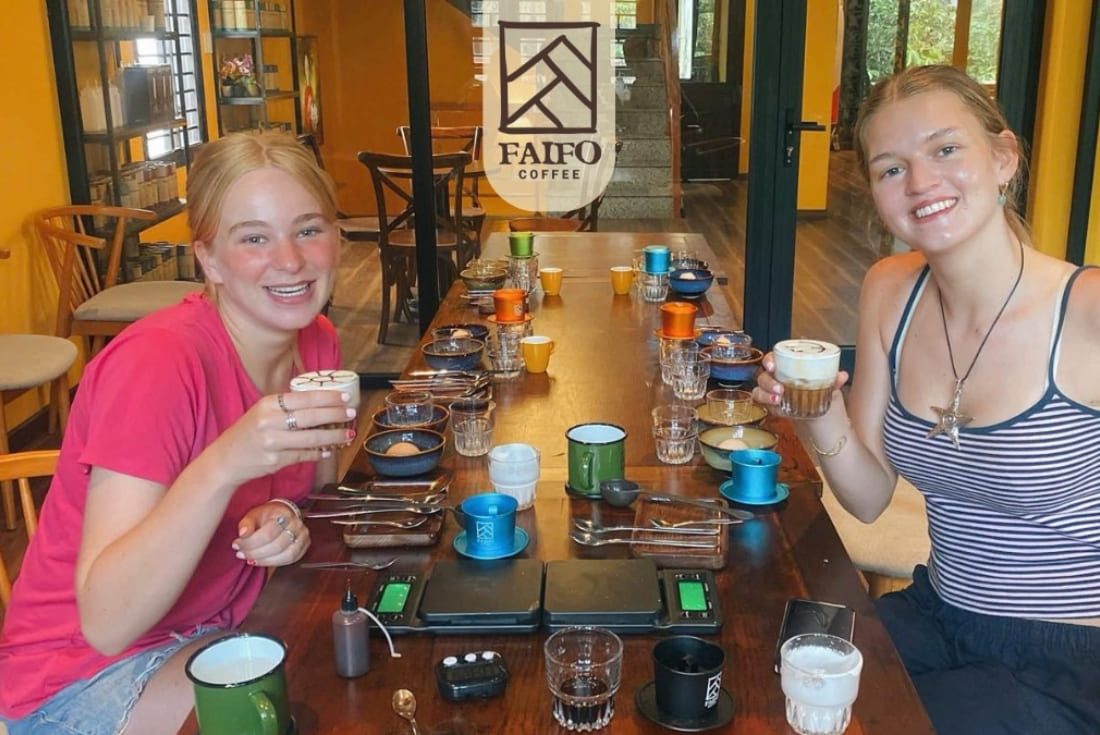
Faifo Coffee occupies a three-storey shophouse on Tran Phu Street – one of the Ancient Town’s main streets – and operates its own coffee roaster on site. The café runs regular coffee-making classes covering Vietnamese brewing methods, bean varieties, and the roasting process, typically lasting around 80 minutes. The rooftop terrace on the third floor looks directly over the tiled rooftops of the Ancient Town; mornings and early evenings offer the clearest views before tourist foot traffic peaks.
Little Faifo Restaurant
- Address: 66 Nguyen Thai Hoc Street, Old Town, Hoi An, Quang Nam Province
- Opening Hours: Daily 11:00 AM-10:00 PM
- Popular Items: Cao Lau, white rose dumplings (Bánh Vạc), Hoi An chicken rice, Nem Lụi, fresh spring rolls
- Vibe: 200-year-old restored merchant house; six distinct dining areas including a 50-seat upper dining room, a 12-seat cocktail bar, and a 14-seat private VIP room
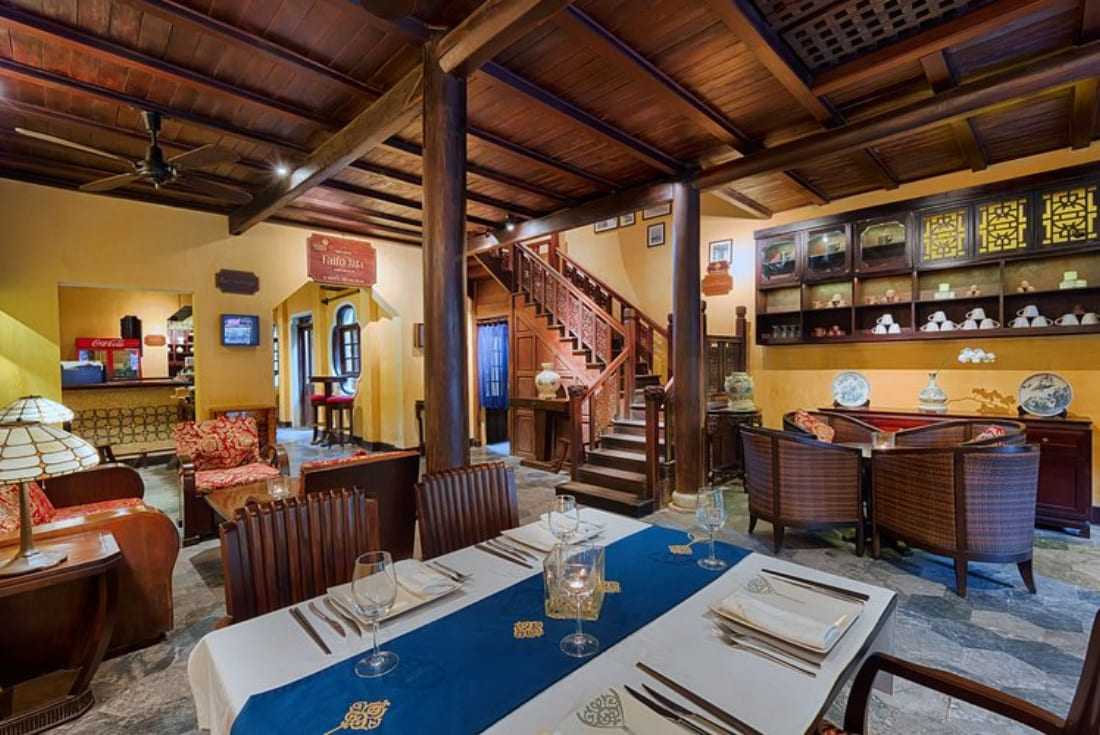
Little Faifo Restaurant is housed in a merchant home that has stood for over 200 years, carefully preserved by the Little Hoi An Group. The menu centres on traditional Vietnamese dishes – Cao Lau, the signature Hoi An noodle dish whose texture depends on water drawn from a specific well, as well as white rose dumplings (Banh vac) and grilled pork skewers (Nem lui) – prepared using traditional preparation methods and locally sourced ingredients. The restaurant also offers cooking classes where guests can learn to recreate Hoi An dishes under the guidance of the house chef.
Faifo Tailor Vietnam
- Address: 441A Hai Ba Trung Street, Hoi An, Quang Nam Province
- Opening Hours: Contact directly; turnaround from 24 hours
- Popular Items: Made-to-measure suits, blazers, shirts, Áo Dài; Go-Green Chemise Collection using natural fibres including lotus, bamboo, and coffee grounds
- Vibe: Design-forward, precision-focused tailoring studio rooted in Hoi An’s 400-year-old garment-making tradition
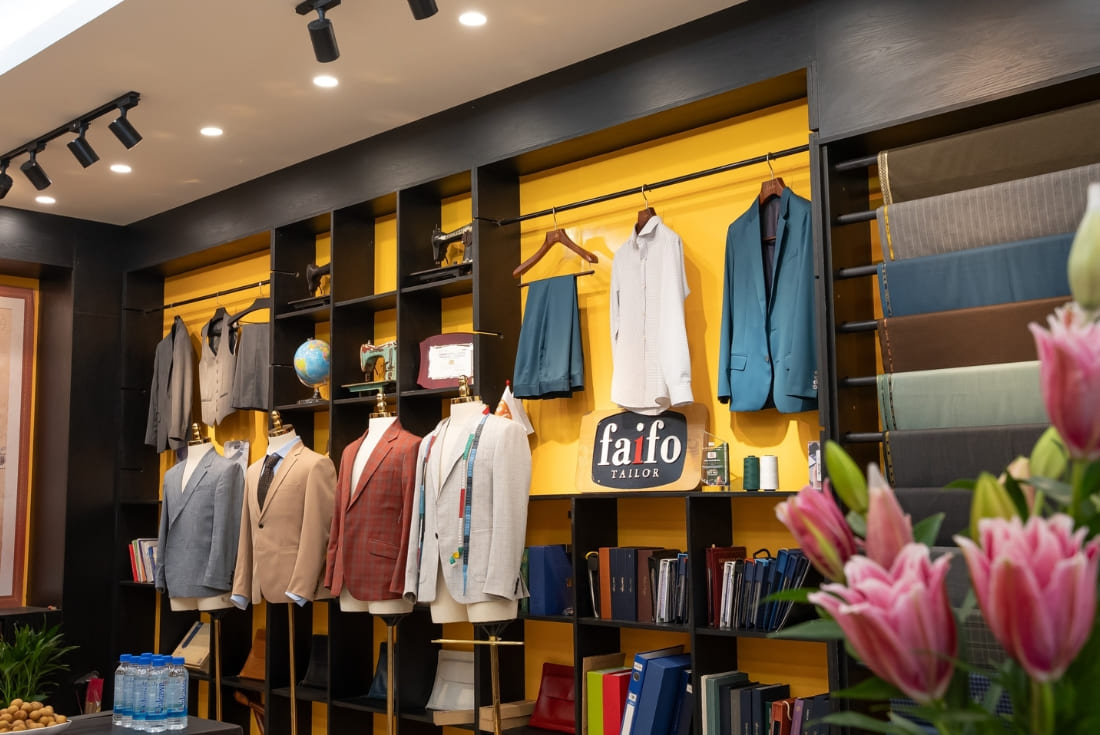
Hoi An has sustained a tailoring culture for over four centuries, shaped in part by the trade in fine fabrics that passed through the port during the Faifo era. Faifo Tailor Vietnam positions itself as a continuation of that craft tradition, offering premium made-to-measure garments with turnaround starting at 24 hours. The studio applies AI-assisted remote measurement technology for international clients and places particular emphasis on material selection – from traditional linen and wool to its Go-Green Chemise Collection, which incorporates natural materials including oyster shells, bamboo fibre, and coffee grounds into wearable garments.
Faifo Factory
- Address: 441 Cua Dai Street, Cam Chau Ward, Hoi An, Quang Nam Province
- Opening Hours: Daily 7:00 AM-7:00 PM
- Popular Items: Salt cream coffee, coconut coffee, egg coffee, oat and almond milk options; hands-on coffee-making classes
- Vibe: Spacious, calm, café-workshop setting with second-floor street views; quieter than the Old Town core
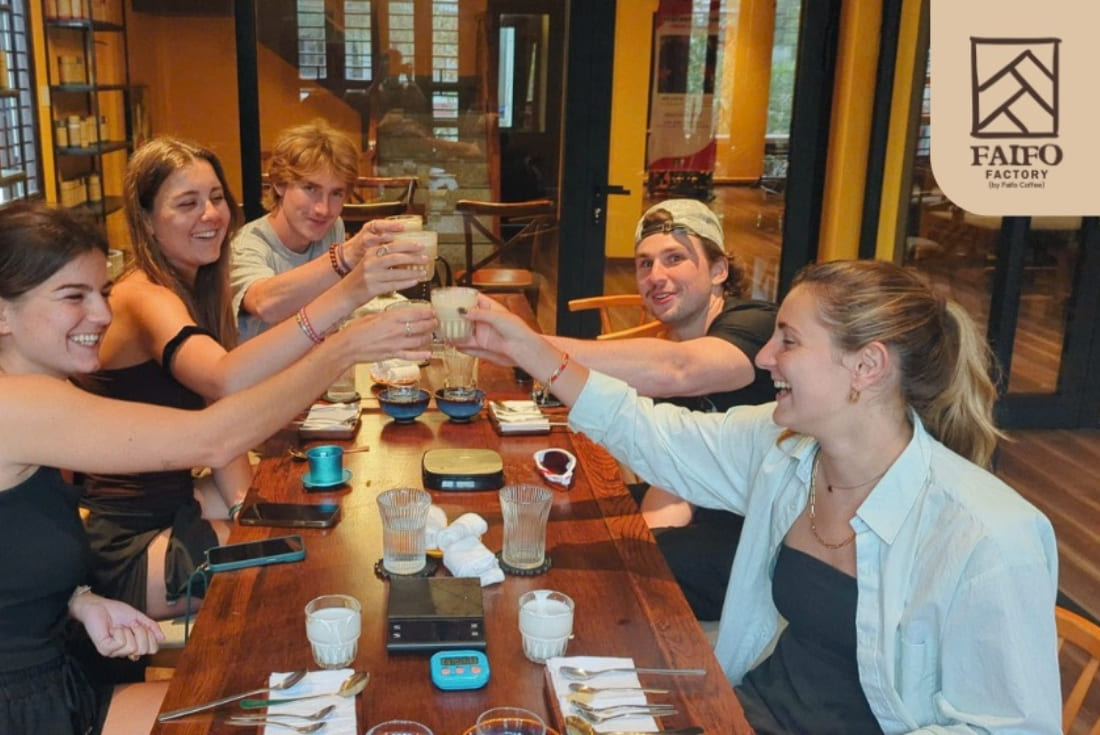
The Faifo Factory operates as both a café and a working coffee education space, founded by a team focused on documenting and sharing Vietnamese coffee culture. The coffee-making classes cover three brewing methods – including salted cream and coconut preparations – alongside an introduction to bean varieties and roasting. The setting is deliberately unhurried, with enough space to work or linger without the density of the Ancient Town’s main streets. It functions as a companion to Faifo Coffee on Tran Phu Street, with a focus shifted toward craft and process rather than heritage aesthetics.
Booking A Place To Rest at Wafaifo Resort Hoi An
The name “Wafaifo” is not coincidental. Wafaifo Resort Hoi An takes its name directly from Faifo – the historical name of Hoi An – combined with the Vietnamese word “wa,” meaning water, which evokes movement, flow, and discovery. The resort was built as a deliberate response to the pressures that tourism growth has placed on the Ancient Town: a property designed to work with Hoi An’s cultural logic rather than displacing it.
Visitors at Wafaifo Resort Hoi An are invited to discover the following experiences:
- Heritage & Culture Pathway: An open-air walk featuring 13 terracotta murals depicting Hoi An’s history (e.g., Coconut Village, local artisans, Cham Island marine life). Each has a QR code for audio/written context.
- An exact replica of Hoi An’s Japanese Bridge: Located at the lobby’s resort, this bridge is where guests can take a closer look of Hoi An’s most iconic bridge
- Breakfast by the Hoi An Way: Two on-site restaurant options: XUA & NAY, an all-day bistro with Central Vietnam’s only Josper charcoal-wood grill; and COI NGUON, a traditional Vietnamese restaurant serving regional specialties like cao lau, mi quang, and nem lui.
- Rooms and Suites: 134 rooms and suites with designs reflecting Hoi An’s architectural identity. The resort features a 25 x 6-metre temperature-controlled salt water pool.
- Signature Wellness Treatments: The Spa offers treatments using local botanicals, including the Ginger Renewal (ginger/lemongrass) and a targeted detoxification/slimming treatment. Wafaifo is Central Vietnam’s only resort to also offer Hyperbaric Oxygen Therapy (HBOT), NuCalm, and IV therapy.
FAQs About Wafaifo Resort Hoi An
Does Wafaifo Resort Hoi An have its own heritage culture?
Yes. The Heritage & Culture Pathway is one of Wafaifo Resort Hoi An’s defining features – a permanent, open-air installation that runs through the property and presents 13 terracotta murals depicting Hoi An’s history as a trading port. The resort’s lobby features an exact replica of the Japanese Bridge, Hoi An’s most recognisable landmark.
What does Wafaifo Resort Hoi An provide in terms of culture?
Wafaifo Resort Hoi An integrates cultural programming through several touchpoints. The Heritage & Culture Pathway offers structured historical engagement. The F&B programme, including Xua & Nay and Coi Nguon, focuses on Central Vietnamese cuisine using traditional methods and local ingredients. The resort’s name, Faifo, and design reference Hoi An’s Old Town. Located just 1.2 km from Hoi An Ancient Town via Lý Thường Kiệt Street, guests have easy access to the town’s markets, assembly halls, workshops, and cultural sites.
Is the service at Wafaifo Resort Hoi An good?
Wafaifo Resort Hoi An is independently managed and purpose-built around what its founders describe as immersive Vietnamese hospitality – a model centred on personal, attentive service informed by local knowledge rather than a standardised international hotel script. The resort employs local staff with detailed knowledge of Hoi An, and its service philosophy prioritises genuine engagement over scripted formality. For current guest feedback, the resort’s listing on major travel review platforms provides the most up-to-date information.