



Hung King’s Festival in Hoi An – Da Nang 2026: Important Dates & Sacred Places to Visit
Vietnam’s Hung King’s Festival is one of the country’s most deeply rooted annual commemorations – a national public holiday marking the founding of the Vietnamese nation by the legendary Hung Kings. Most visitors to Hoi An encounter it as a day of incense smoke rising from temple courtyards and quiet streets emptier than usual. However, few realise that the festival animates the town’s religious sites in a way that reveals the spiritual infrastructure still active beneath its UNESCO-listed facades. This guide covers the key dates, the five most significant temple sites in Hoi An, the principal rituals practised during the festival, and practical preparation advice for travellers planning to be in the region.
What Is The Hung King’s Festival?
The Hung King’s Festival, known in Vietnamese as Giỗ Tổ Hùng Vương, is held on the 10th day of the third lunar month each year to honor the Hung Kings, the semi-legendary founders of the Vietnamese state. The 2026 observance falls on 26 April. The primary national ceremony takes place at Hung Temple on Nghia Linh Mountain in Phu Tho Province, north of Hanoi, where pilgrims and delegations arrive from the 8th to the 11th of the third lunar month.
Since 2007, the date has been recognized as a national public holiday, closing government offices and many businesses across Vietnam. In Hoi An, the festival is observed at temples and communal houses throughout the Ancient Town and its surrounding communes, with incense offerings, ceremonial prayers, and community processions that reflect the town’s own layered cultural identity.
Top 5 Temples To Visit During The Hung King’s Festival in Hoi An
Hoi An’s Ancient Town contains more than 20 active temples and communal houses, most of them built between the 17th and 19th centuries. During the Hung King’s Festival, these sites shift from tourist landmarks to functioning places of worship – incense is lit, offerings placed, and ceremonies conducted with the participation of local families. The five temples below represent the most historically and architecturally significant sites within reach of the town centre, each reflecting a distinct strand of the community’s spiritual life.
Phap Bao Temple (Chùa Pháp Bảo)
- Address: No. 7 Hai Ba Trung Street, Quang Nam Province, Vietnam
- Opening hours: 7:00 am – 6:00 pm daily | Free entry
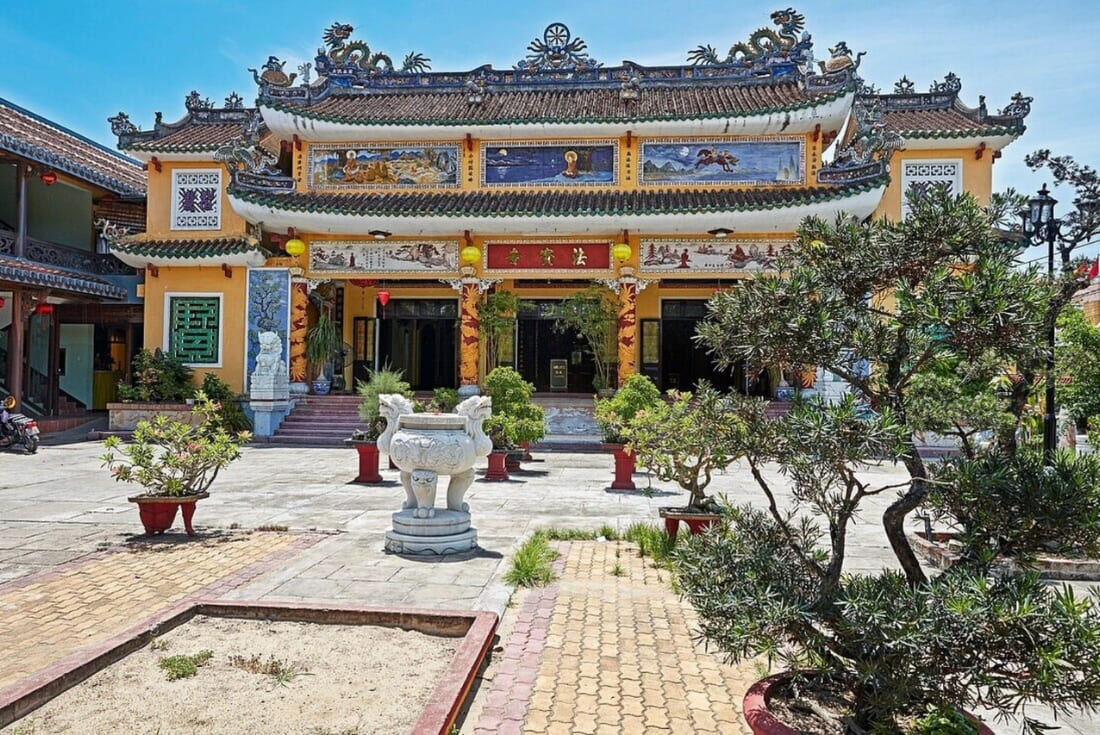
Phap Bao Pagoda is a serene Mahayana Buddhist sanctuary located on Hai Ba Trung Street in the heart of Hoi An Ancient Town, a UNESCO World Heritage site in Quang Nam Province, offering visitors a calm retreat right in the city center. Its elegant two-story architecture reflects traditional Hoi An house design with solemn, intricate decorative details, creating a peaceful spiritual atmosphere that makes it a meaningful place to explore Vietnam’s living cultural and religious heritage.
Ong Temple (Chùa Ông / Quan Cong Temple)
- Address: 24 Tran Phu Street, Cam Chau Ward, Hoi An
- Opening hours: 7AM – 5PM | Free entry
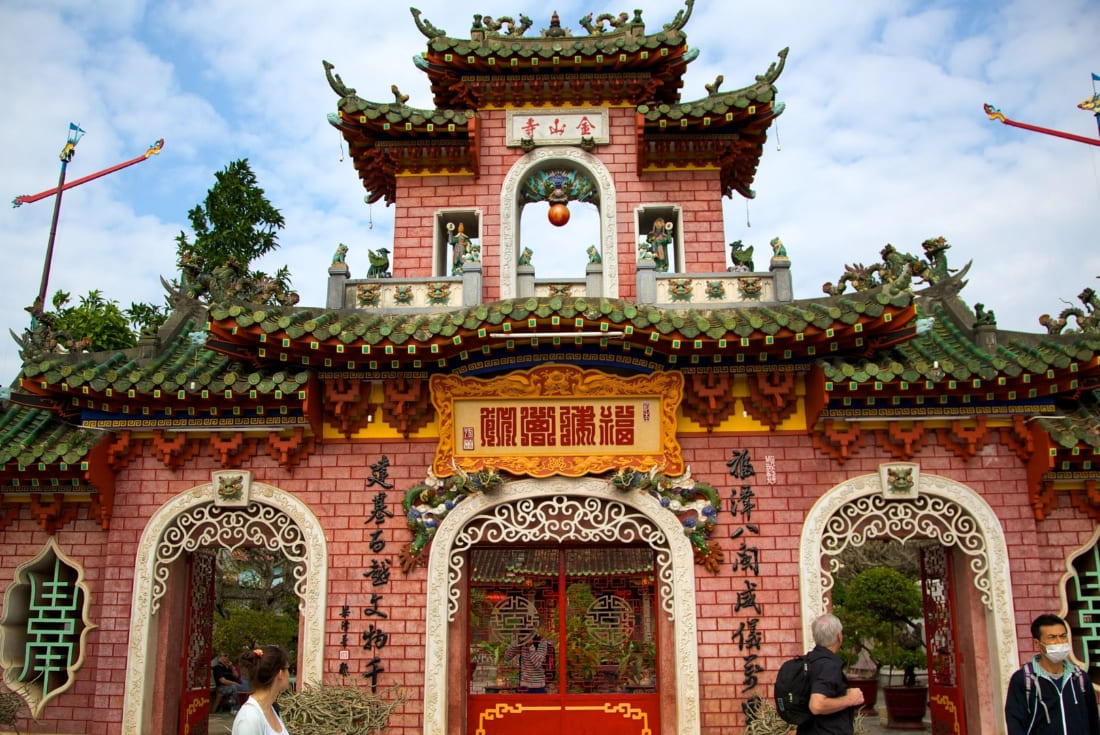
Chua Ong, also known as Quan Cong Temple, is a 17th‑century temple at 24 Tran Phu Street in Hoi An, built by the Minh Huong community and Vietnamese residents to honor General Guan Yu, the famed Three Kingdoms hero celebrated for loyalty and righteousness. The temple stands out for its four‑building complex arranged in a square layout, richly decorated tiled roofs with dragon and mythical “Giao” motifs, an imposing main hall with exquisitely carved statues of Guan Yu, his attendants, and life‑size worshipped horses, as well as many antique inscriptions and royal decrees that together create a uniquely atmospheric, historically rich stop for visitors in Hoi An Ancient Town.
Ba Mu Temple (Chùa Bà Mụ)
- Address: 675 Hai Ba Trung Street, Minh An Ward, Hoi An
- Opening hours: Open daily, no strict regulated hours | Free entry
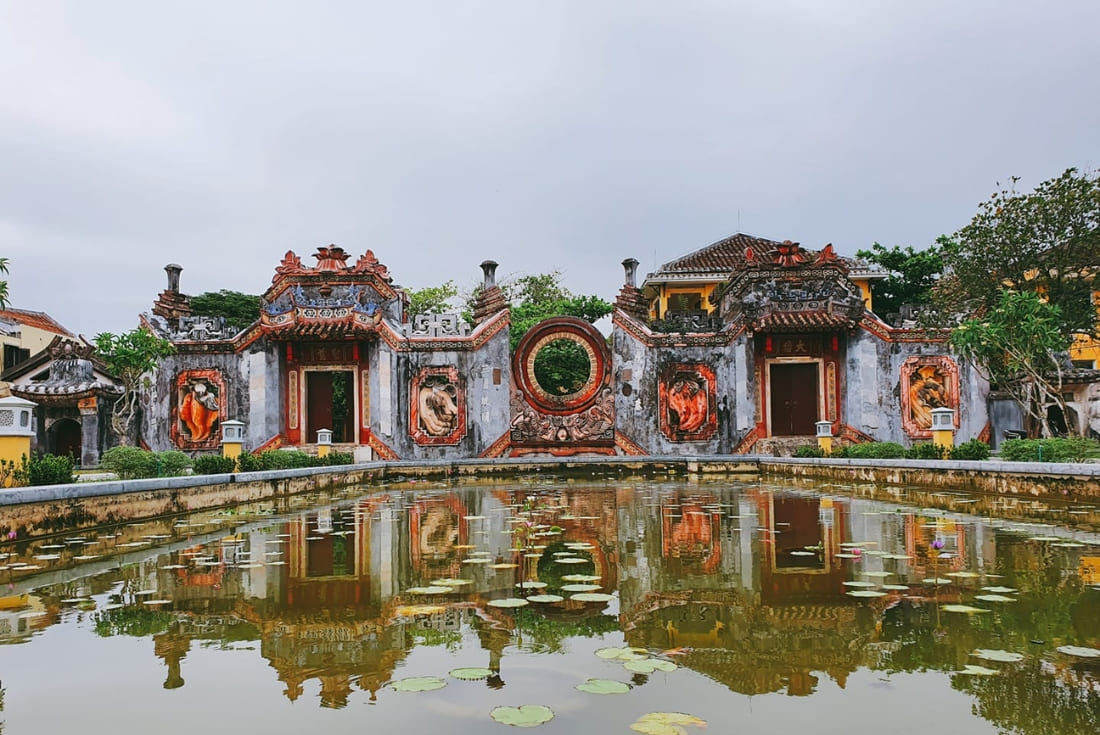
Ba Mu Temple, originally known as Cam Hai Nhi Shrine, is a historic spiritual site built in 1626 by the Minh Huong community on fertile alluvial land between Cam Pho and Thanh Ha in Hoi An, once a finely carved wooden complex dedicated to protective deities and the Twelve Midwives and now best known for its restored three-entrance gate on Hai Ba Trung Street, officially named “Ba Mu Temple Gate” in 2019. This place is special not only for its distinctive, highly praised architecture and serene setting with lotus pond, green courtyard, and tranquil atmosphere, but also because it is deeply tied to touching local legends about a compassionate woman (often called Le Thi Ngoc Thanh) sent from heaven to help people, giving visitors a unique chance to both enjoy beautiful scenery and feel the humanistic spirit at the heart of Hoi An’s heritage.
Phuoc Lam Pagoda (Chùa Phước Lâm)
- Address: Le Hong Phong Street, Cam Ha Ward, Hoi An City, Quang Nam Province, Vietnam
- Opening hours: 7:30AM – 9:30PM daily | Free entry
Phuoc Lam Pagoda is one of the oldest Buddhist temples in Hoi An, with a history of more than 200 years closely linked to the spiritual life of locals in Quang Nam. Tucked away in a quiet, green compound about 3 km from the Japanese Covered Bridge, it offers a tranquil escape from the bustling ancient town. Its charm lies in the traditional “Mon”-shaped layout, moss-covered three-entrance gate, peaceful tree-filled courtyard and main hall with yin-yang tiled roofs and finely carved dragon details. Inside, the pagoda preserves valuable woodblocks, antique porcelain and ancient Buddha statues, creating a serene space where visitors can admire both religious art and a timeless, sacred atmosphere.
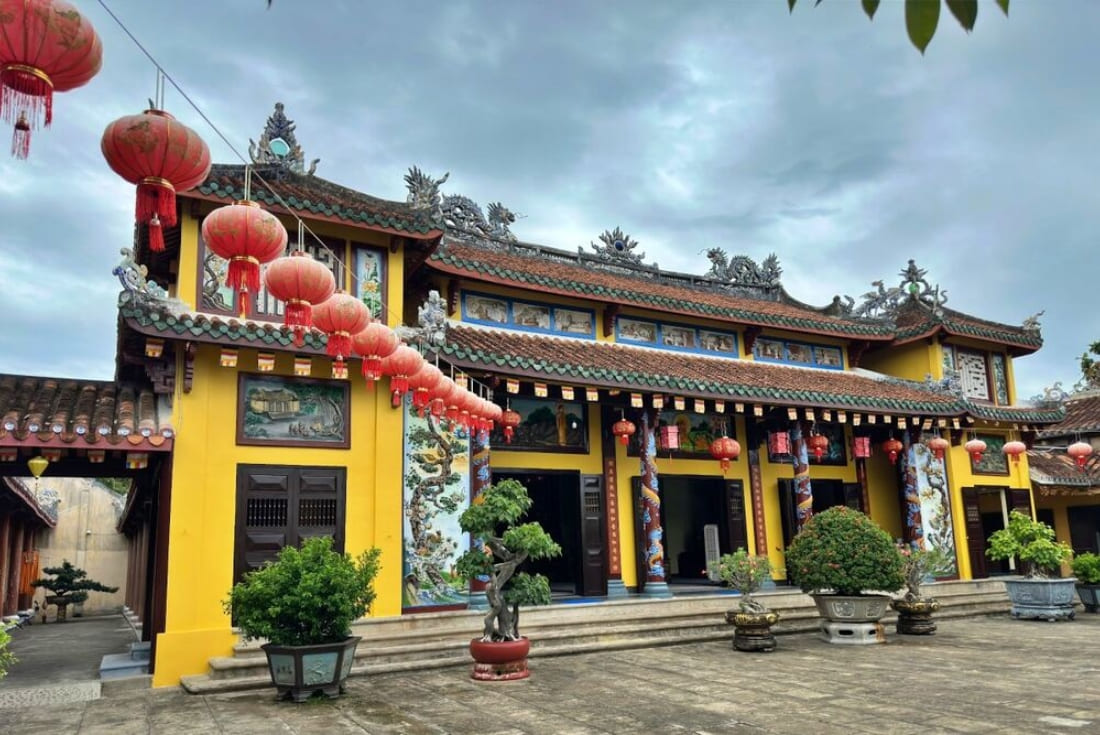
An Lac Pagoda (Chùa An Lạc)
- Address: Nguyen Du Street, Thanh Ha Ward, Hoi An City, Quang Nam Province, Vietnam
- Opening hours: Open daily | Free entry
An Lac Pagoda was established in 1966 and holds a distinct place among Hoi An’s religious sites: it was originally founded as a residential institution for orphaned children, making it the only pagoda in the town with this founding purpose. Set on the right bank of the Thu Bon River, approximately 4 kilometres from the Ancient Town, the pagoda has grown through decades of renovation into a recognised Buddhist temple in its own right. The river setting and surrounding rice fields give An Lac a quieter character than the sites within the Ancient Town’s pedestrian zone. During the Hung King’s Festival, the pagoda hosts morning ceremonies for local residents from the surrounding communes who are less likely to make the journey to the denser temple sites in the town centre.
Main Rituals & Cultural Celebrations
The Hung King’s Festival in Hoi An is observed primarily through temple-based ritual rather than large public processions. Three practices define the festival’s ceremonial structure and are present at most of the active sites in the region.
Incense Offering Ceremony (Lễ Dâng Hương)
The incense offering ceremony – Lễ Dâng Hương – is the central ritual of the Hung King’s Festival at the local level. Participants light incense bundles at the main altar of a temple, bow three times, and recite prayers honouring the ancestors and the founding Hung Kings. In Hoi An, this ceremony takes place in the early morning, typically between 6:00 and 8:00 am, at temple sites including Ong Temple and Phap Bao Temple. The ceremony is open to visitors who approach it with appropriate dress and conduct. Temples provide incense for purchase at the entrance; no ticket is required for participation.
Pilgrimage to Nghia Linh Mountain
The national centre of the Hung King’s Festival is Hung Temple on Nghĩa Lĩnh Mountain in Phú Thọ Province, approximately 80 kilometres north of Hanoi. Pilgrims travel from across Vietnam between the 8th and 11th day of the third lunar month, with the main state ceremony conducted on the 10th day. In 2026, this falls on 6 April. The pilgrimage route ascends through three distinct temple complexes – the Lower Temple (Đền Hạ), the Middle Temple (Đền Trung), and the Upper Temple (Đền Thượng) – each associated with a specific stage of the Hung Kings’ mythological history. Travellers based in Hoi An or Da Nang during this period may wish to note that flights to Hanoi with onward travel to Phú Thọ are available, though the Phú Thọ pilgrimage functions as a separate multi-day journey from the Central Vietnam temple circuit.
Symbolic Offerings (Lễ Vật Dâng Cúng)
Offerings presented during the Hung King’s Festival follow a pattern rooted in the mythology of the Hung Kings themselves. The two most significant offerings are bánh chưng – a square sticky rice cake filled with pork and mung bean, wrapped in dong leaves – and bánh giầy, a round sticky rice cake made from glutinous rice and shaped by hand. According to the legend of Lang Liêu, the 18th Hung King’s son invented both cakes as offerings that symbolised the earth (bánh chưng, square) and the sky (bánh giầy, round). Other common offerings include fruit, incense, and fresh flowers placed at the altar. In Hoi An markets in the days before the festival, bánh chưng is sold at most food stalls and is available for visitors to purchase and observe being prepared.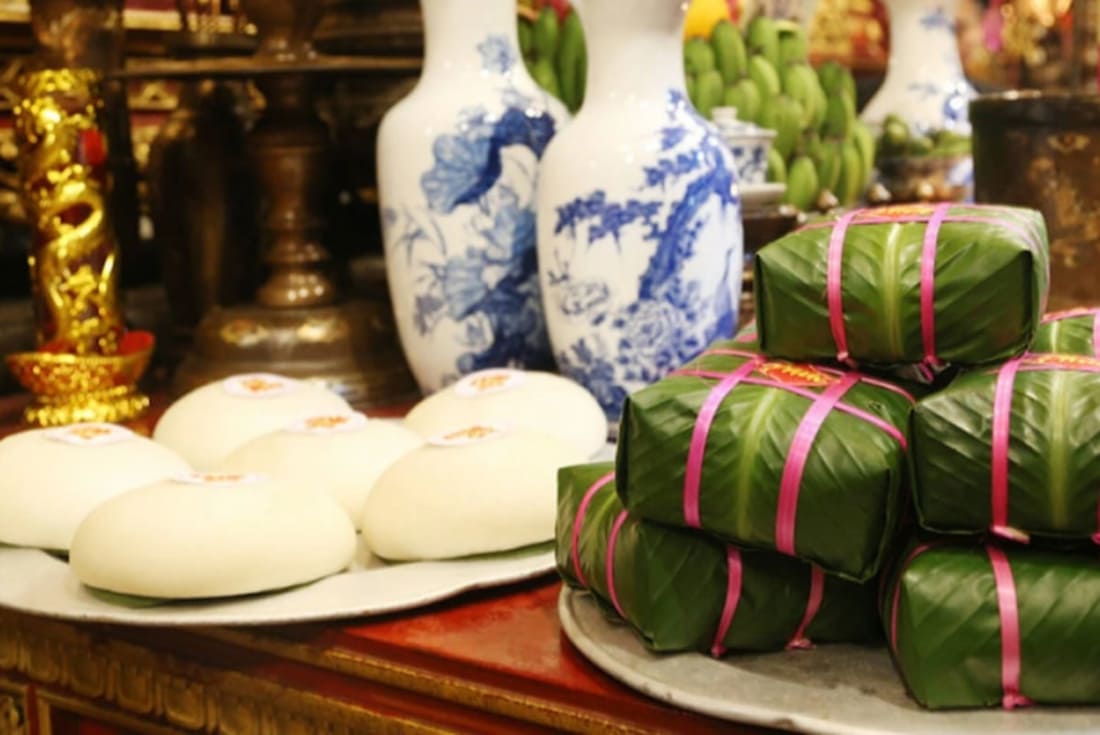
Tips For Preparing For The Hung King’s Festival in Hoi An
The Hung King’s Festival is a national public holiday. In Hoi An, this means some businesses close, temple sites draw larger local crowds in the early morning, and markets operate on reduced hours. Planning ahead makes the difference between an enriching visit and a frustrating one. The following practical points apply specifically to the Hoi An context.
Dress Respectfully
Active temple sites in Hoi An require covered shoulders and knees for entry into worship areas. Lightweight trousers and a short-sleeved shirt with a scarf or wrap for the shoulders are sufficient. Several temples, including Phap Bao Temple, keep wraps available at the entrance gate for visitors who arrive underprepared. The festival period carries a more formal atmosphere than ordinary sightseeing days – quieter conduct inside the temple grounds is expected.
Bring Water & Snacks
The Hung King’s Festival falls in early April – Central Vietnam’s dry season, when daytime temperatures reach 32-35°C with low humidity. Temple visits involve outdoor courtyards, stone paths, and limited shade. Carrying 500ml of water per person per hour of outdoor walking is a standard requirement. Street food stalls near the Ancient Town entrance and at the Hoi An Central Market sell fresh bánh chưng, steamed rice cakes, and seasonal fruit – a practical and culturally appropriate way to observe the festival’s food traditions without planning a full restaurant meal.
Bring Cash
All five temples listed in this guide are free to enter. However, the Hoi An Ancient Town ticketing zone applies to sites within the UNESCO-listed perimeter, which includes Ong Temple and Ba Mu Temple. Market purchases, incense offerings, and street food vendors in the festival period operate on cash only. ATMs are available at the main entrance to the Ancient Town and along Tran Phu Street, but lines are longer on public holidays. Withdrawing cash the day before the festival begins is advisable.
Learn a Few Vietnamese Phrases
Basic Vietnamese phrases relevant to temple visits reduce friction and are received with genuine appreciation by local residents during a national observance. Three phrases cover most situations:
Xin chào – Hello (formal greeting, appropriate at temple gates)
Xin phép – Excuse me / May I (used when passing through a ceremony or seeking permission to photograph)
Cảm ơn – Thank you
Finding a Place to Rest in Hoi An During the Festival Period?
The Hung King’s Festival is a period when Hoi An slows deliberately – incense replaces traffic noise in the early morning, temple courtyards hold a stillness that the rest of the year rarely offers. For travellers who want to engage with the festival rather than simply observe it, returning to a base that understands the town’s rhythm matters. Wafaifo Resort Hoi An sits 1.2 km from Hoi An Ancient Town via Ly Thuong Kiet Street – close enough to reach the morning ceremonies on foot, far enough to offer a quiet return.
For travellers who have covered significant ground during the festival, Wafaifo Resort Hoi An offers a considered place to return to:
- 134 rooms and suites designed around Hoi An’s material culture, with interiors that reflect the town’s architectural identity rather than a generic resort template.
- A 25 x 6-metre temperature-controlled outdoor pool, suited to an unhurried afternoon after a full morning of festival visits.
- The only resort in Central Vietnam to offer Hyperbaric Oxygen Therapy (HBOT), NuCalm neuroacoustic therapy, IV therapy, and epigenetic hair testing. Each is available individually; together they form a recovery programme for travellers arriving from long-haul flights or finishing a day of intensive walking in April heat.
For travellers visiting for the AirAsia RedRun Danang 2026 – Champion21 (24-27 April 2026), Wafaifo Resort Hoi An has a dedicated package for the event. The package covers a minimum 2-night stay in a Faifo King or Twin room, one dinner the evening before the race per adult per stay, roundtrip transfer between Hoi An and Da Nang, and recovery wellness – a 1-hour oxygen session before the run and a 15-minute ice bath after. Higher room categories are available with an upgrade fee.
For detailed information about the event, visit the official event page.
To reserve a place in the package, contact the reservations team directly:
- Zalo / WhatsApp: +84 888 122 799
- Email: [email protected]
Or book directly online. The package is non-refundable; reservations close 27 April 2026.