




6 Most Authentic Cultural Workshops In Hoi An For Hands-On Travellers
Hoi An is a town best understood through the hands, not only through sightseeing. A Hoi An workshop offers a respectful way into local craft, daily rituals, and material culture: shaping a lantern frame, throwing clay, bending bamboo, carving wood, hammering silver, reworking old fabric, or brewing Vietnamese coffee. This guide helps travellers choose a workshop in Hoi An by interest, pace, location, and comfort level.
Why A Hoi An Workshop Is A Meaningful Way To Experience Local Culture
Hoi An’s craft identity grew from its history as a preserved trading port, where Vietnamese, Japanese, Chinese, and European traditions met and settled into daily life. That inheritance is still active: the town’s creative culture spans more than 50 crafts and craft villages, including lantern-making, bamboo craft, garment-making, Kim Bong Carpentry Village, Thanh Ha Pottery Village, Tra Que Vegetable Village, and Cam Thanh Village. What makes a workshop different from a tour is participation rather than observation. Travellers learn by shaping clay, bending bamboo, stretching silk, carving wood, brewing coffee, or reworking old fabric, guided by makers who use these skills daily. These are not performances staged for tourists; they are living skills, shared. For culturally curious travellers, boutique families, slow travellers, and wellness-minded guests who value mindful pacing, a workshop turns an afternoon into something kept.
1. Lantern Workshops in Hoi An
Lantern-making is the most recognisable Hoi An workshop, because the silk lantern is the town’s own object. A typical lantern workshop in Hoi An moves through the full process: choosing silk or fabric, shaping the bamboo frame, attaching the panels, folding the finished lantern flat, and sometimes painting or decorating it. The work rewards patience more than skill, and the choices along the way carry meaning, since colours hold local symbolism, with red linked to luck and yellow to prosperity. It also works well as a gentle indoor activity during midday heat or rain, and the finished lantern folds small enough to travel home in a suitcase.
Suggested locations:
- Hằng Dũng Lantern & Painting Class: 51 Nguyen Thai Hoc, Minh An, Hoi An, Quang Nam, Vietnam. Open 9:00 AM to 10:00 PM
- Lantern Making Class With Lynn: 8/6 Nguyen Thi Minh Khai, Minh An, Hoi An, Quang Nam, Vietnam. Open 9:00 AM to 10:30 PM
- The Lantern Lady: 3/6 Phan Boi Chau Street, Hoi An, Da Nang, Vietnam. Open 9:00 AM to 8:00 PM
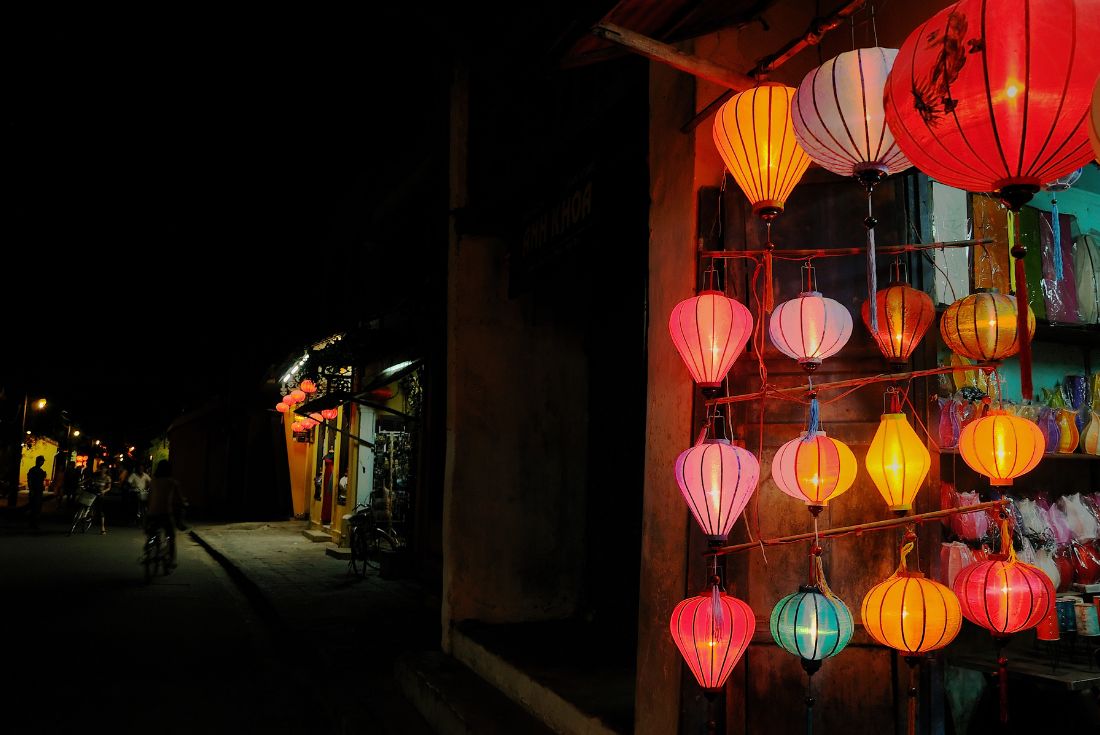
Lantern Workshops in Hoi An
2. Cooking Classes In Hoi An
A cooking class is one of the most practical ways to understand Hoi An’s food culture beyond dining out. Many classes begin with a market visit or a walk through a herb garden, so travellers learn the ingredients, regional flavours, and everyday kitchen habits before any cooking starts. The hands-on part follows: pressing fresh rice paper, balancing fish sauce, folding white rose dumplings, assembling cao lầu (Hoi An’s signature noodle dish) or spring rolls, and plating each dish. Cooking suits sensory learners best, since the lesson arrives through taste, smell, texture, and conversation at the table. For a fuller overview of options, see this guide to Hoi An cooking classes.
Suggested locations:
- Tra Que Organic Cooking Class: Tra Que Village, Hoi An Tay, Vietnam. Open 8:00 AM to 5:00 PM
- Hoi An cooking class by Ms Phu: 90/5 Truong Minh Hung Street, Cua Dai Ward, Vietnam. Open 7:00 AM to 10:00 PM
- Minh Hien Vegetarian Cooking Class Tour: 30A Dinh Tien Hoang Street, Hoi An Tay, Vietnam. Open 8:00 AM to 10:00 PM
- Laco Cooking Class & Restaurant: 500 Tran Nhan Tong Street, Cam Thanh Ward, Vietnam. Open 9:00 AM to 9:00 PM
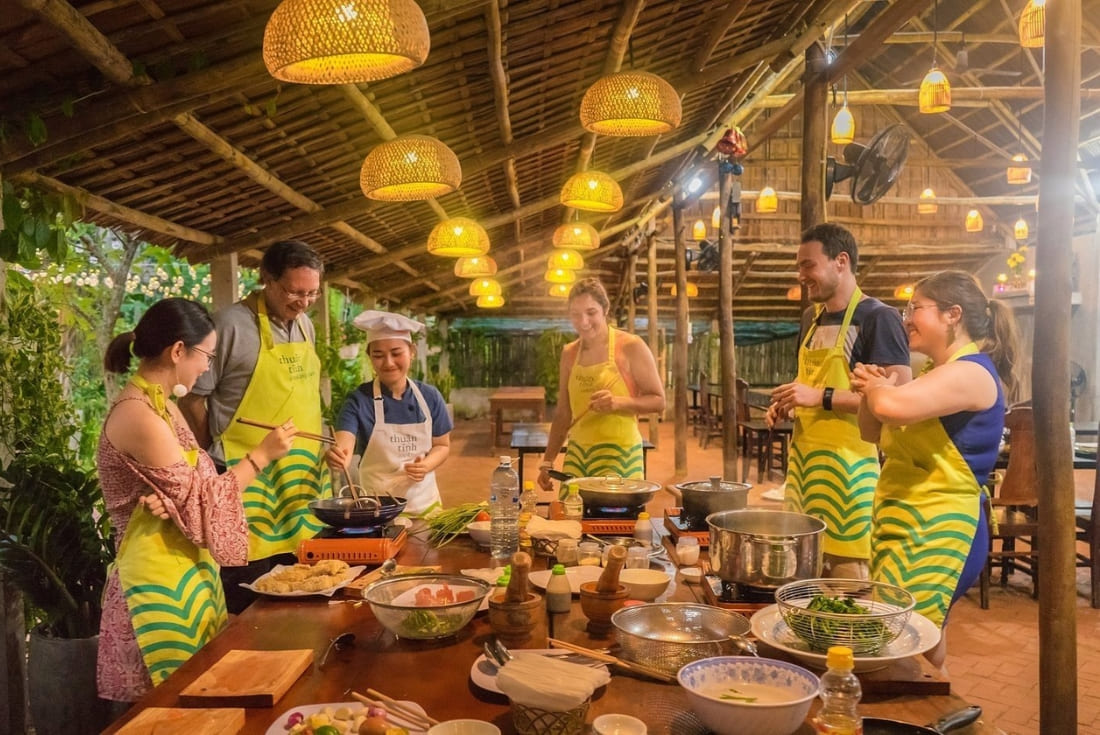
Join Cooking Classes In Hoi An
3. Traditional Pottery Workshops in Hoi An Ancient Town
Traditional pottery in Hoi An centres on Thanh Ha, a riverside village that has fired terracotta for around five centuries. A visit can be as light or as involved as travellers want: watching artisans work the kick-wheel, trying to shape clay on a wheel themselves, decorating a small piece, or simply learning how basic forms take shape. The village setting gives the activity its context. Kilns, terracotta objects, workshop yards, and everyday craft spaces surround the lesson, so the visit teaches how a pottery community actually lives. One practical note: ask in advance whether finished pieces can be taken home the same day, since some items need drying or firing time and workshops handle this differently.
Suggested locations:
- Thanh Hà Pottery Village: Pham Phan, Hoi An Tay Ward, Da Nang, Vietnam. Open 8:00 AM to 6:30 PM
- Pottery Mỹ Linh: Group 24, Nam Dieu Hamlet, Hoi An Tay, Da Nang, Vietnam. Listed as open 24 hours; contact the workshop before visiting
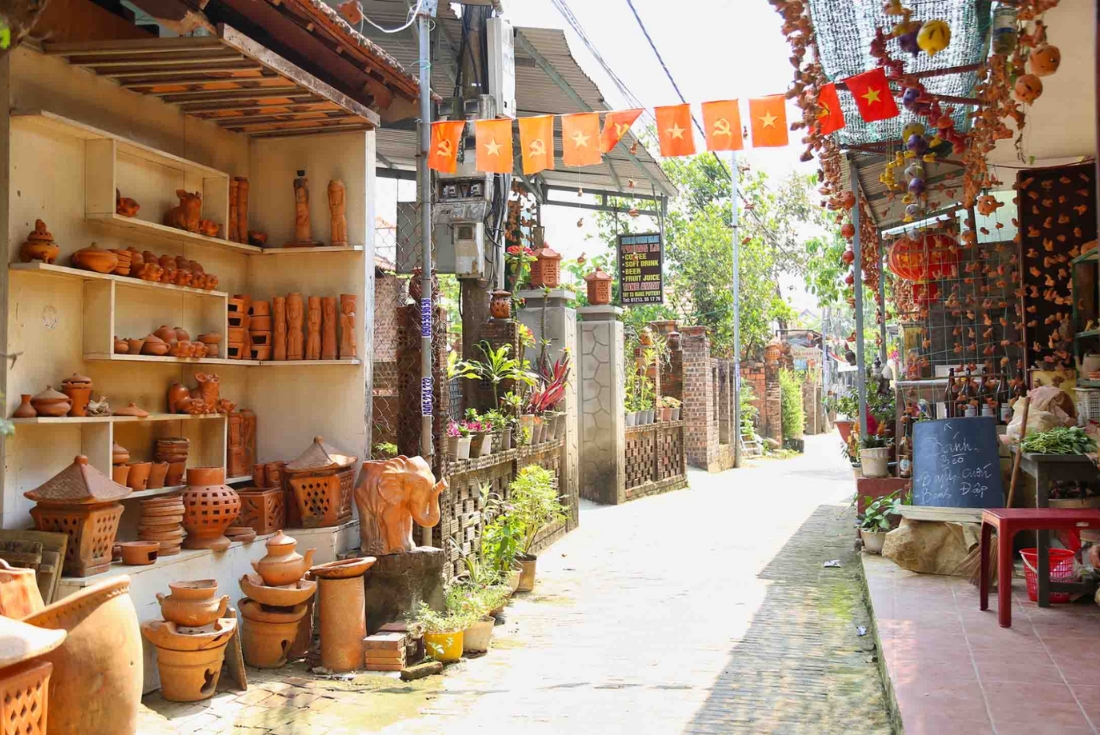
Traditional Pottery Workshops in Hoi An Ancient Town
4. Bamboo Crafting And Wood Carving Workshops
Bamboo and wood are the working materials of daily life in the villages around Hoi An, shaped into homes, boats, tools, and furniture long before they became souvenirs. A bamboo session covers cutting, shaping, sanding, and joining, and the surprise for most first-timers is the material itself: flexible enough to bend, strong enough to build with. Wood carving runs slower, built on tracing, chiselling, and smoothing under an artisan’s eye. The two villages offer distinct rhythms. Cam Thanh, home to the three-generation family behind Taboo Bamboo Workshop, sits among water coconut groves, while the Kim Bong area carries a carpentry lineage that once served royal builders. Both reward time and respect for the material more than speed. Suggested locations:
- Taboo Bamboo Workshop: Thanh Tam Dong, Tran Nhan Tong, Hoi An Dong, Da Nang, Vietnam. Open 7:30 AM to 5:30 PM, closed Sunday
- Ngô. (Wood Art and Workshop): Trung Ha Village, Hoi An, Da Nang, Vietnam. Open 7:30 AM to 11:30 AM and 1:00 PM to 4:30 PM
5. Silver Jewellery And Fabric Upcycling Workshops
These workshops centre on small-scale making: leaving with something wearable, personal, and tied to the memory of an afternoon. In a silver session, participants shape, hammer, and polish under guidance, and the appeal is simple: a ring or small ornament finished by one’s own hands, still holding the warmth of the metal. Fabric upcycling works from the other direction, turning discarded or leftover textiles into patchwork, bags, lantern decoration, or fabric art. The sustainability here is real but modest, a practical habit of using what exists rather than a grand statement. The pleasure is tactile throughout: cloth texture, hand stitching, small tools, and slow finishing. Suggested locations:
- Lotus Leaf Fine Arts: 395 Cua Dai, Hoi An Dong, Da Nang, Vietnam. Open 10:00 AM to 7:00 PM; Sunday 1:00 PM to 5:30 PM
- HOIAN CRAFT SISTERS STUDIO: 69/7 Phan Boi Chau Street, Hoi An, Da Nang, Vietnam. Open 9:00 AM to 8:00 PM
6. Vietnamese Coffee Brewing Workshops
A coffee-making class in Hoi An teaches ritual as much as recipe. Sessions typically cover brewing with the phin, the small metal drip filter used across Vietnam, along with condensed milk, egg coffee, salt coffee, coconut coffee, roasting notes, and the differences between regional beans, including why robusta plays such a central role in Vietnamese coffee. The pace is the lesson: waiting for the drip to finish, noticing the aroma change, adjusting sweetness by small degrees. Because everything happens seated at a table, a coffee workshop pairs naturally with a relaxed morning or a quiet afternoon, and it asks nothing of the knees or the back after a long day of walking. Suggested locations:
- FAIFO FACTORY: 441 Cua Dai, Hoi An, Da Nang, Vietnam. Open 7:00 AM to 7:00 PM
- Hoi An Coffee Making Class – Coffee Workshop: An My, Hoi An Dong, Da Nang, Vietnam. Open 8:00 AM to 6:00 PM
- Coffee Workshop Hoi An – Coffee Making Class: Tran Nhan Tong Street, Hoi An Dong Ward, Da Nang, Vietnam. Open 8:30 AM to 5:00 PM
Practical Tips For Choosing The Right Hoi An Workshop
- Match the workshop to your energy level. Lantern-making and coffee experiences are generally relaxed, while pottery, bamboo, and wood carving ask for more time and concentration.
- Check the location before booking. Workshops in the Old Town are easy to reach on foot, while those in Cam Thanh, Thanh Ha, or Kim Bong may require a bicycle, taxi, or arranged transfer.
- Confirm the details in advance: class duration, what is included, the teaching language, and whether the finished item can be safely packed for travel.
- Dress for the work. Wear comfortable clothing that can handle clay, paint, coffee, or light craft marks, and bring cash, since smaller workshops may not accept cards.
- Respect the artisans. Ask permission before photographing people, private workspaces, or unfinished pieces.
- Focus on the experience rather than perfection. Handmade creations carry small imperfections, and those are part of their charm.
- Pace the day. Guests staying at Wafaifo Resort Hoi An can pair a morning workshop with dining, relaxation, a wellness treatment, or the pool between activities.
Unwind at Wafaifo Resort Hoi An After Your Workshop
After a full day of crafting, from shaping lanterns in the Old Town to throwing clay in Thanh Hà, returning to a comfortable, centrally located resort makes all the difference. Wafaifo Resort Hoi An is positioned so guests can reach every workshop district in this article without long transfers.
- Central location: 1.2 km to Hoi An Old Town and 2.8 km to the Tra Que Village and Thanh Hà Pottery Village area, easily reached by bicycle or a short taxi.
- Dining after workshops: NEM Private Dining Room, XUA & NAY Restaurant, COI NGUON Restaurant, and the Vuong Gia Private Dining Room suit a relaxed dinner after a hands-on afternoon.
- Occasional on-site cultural experiences, subject to availability: the Heritage and Culture Pathway and the Japanese Bridge replica.
- Wellness by Wafaifo: high-tech experiences including Hyperbaric Oxygen Therapy, infrared sauna, red light therapy and personalised recovery programmes found nowhere else in Hoi An.
- Outdoor pool: a 25 x 6-metre temperature-controlled saltwater swimming pool, with water that stays cool and comfortable even during summer.
- Private cinema for up to 8 guests.
Book your stay at Wafaifo Resort Hoi An: your base for exploring the most authentic workshops in Hoi An.