




The Japanese Bridge: An Ancient Icon In Hoi An’s Heart
The Japanese Bridge is one of Hoi An’s most recognisable landmarks, carrying centuries of history and reflecting the cultural exchange that shaped the ancient trading port. More than a historic crossing, its distinctive architecture, temple and enduring connection with the Japanese community make it a fascinating stop in Hoi An Ancient Town. Here’s what to know before visiting this iconic piece of Hoi An heritage.
Where is The Japanese Bridge In Hoi An
- Location: Nguyen Thi Minh Khai Street, Hoi An, Da Nang
- Opening time: Daily, 9 AM-10 PM
Known locally as Chùa Cầu and also called the Japanese Covered Bridge, this historic landmark sits at the western end of Hoi An Ancient Town, connecting Nguyen Thi Minh Khai and Tran Phu streets. With its covered wooden structure and small shrine, the bridge is one of Hoi An’s most recognisable heritage sites and an important reminder of the town’s history as a multicultural trading port.
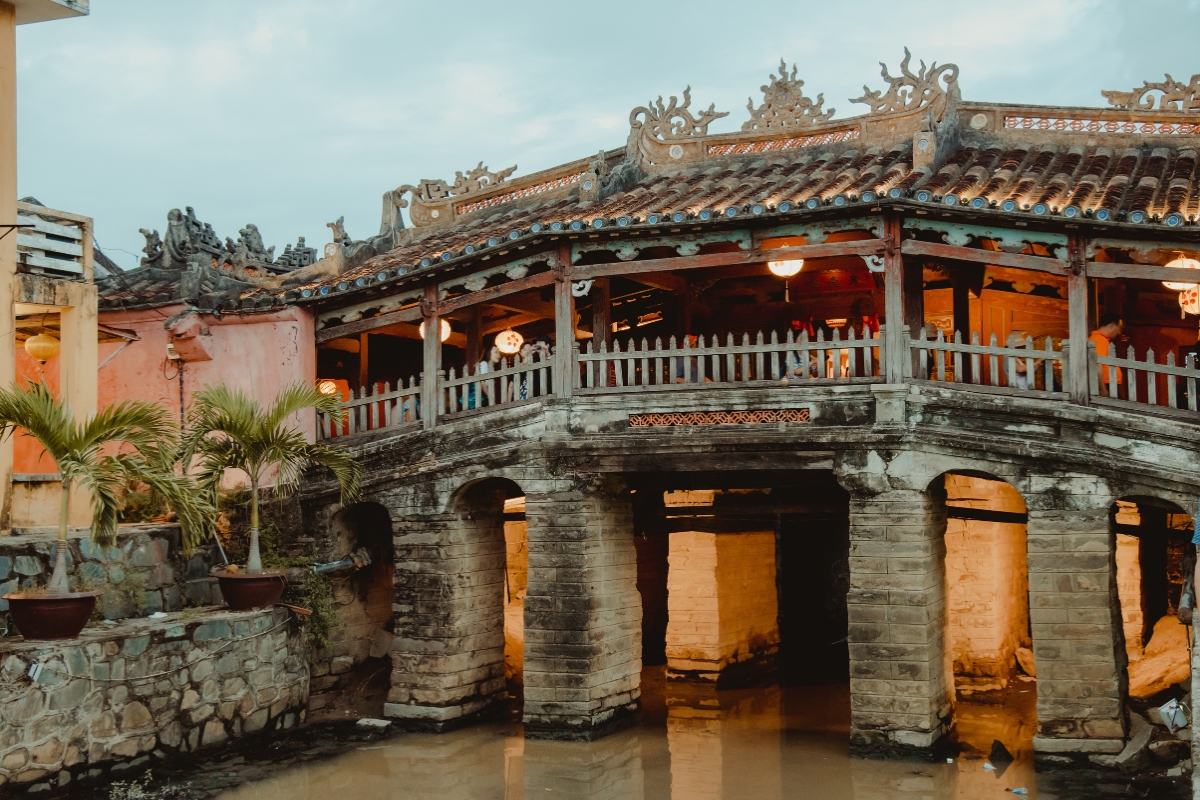
The Japanese Bridge In Hoi An
Discover The Story Behind The Japanese Bridge
Why was the Japanese Bridge built?
The Japanese Bridge is traditionally associated with the Japanese merchant community that settled and traded in Hoi An during the town’s prosperous trading period in the late 16th and early 17th centuries. Historical records and local heritage research generally attribute the bridge’s construction to Japanese merchants, while its position helped connect areas of the old trading town. The bridge reflects Hoi An’s role as a meeting point for Japanese, Chinese, Vietnamese and other international trading communities.
History of the Japanese Bridge?
Chùa Cầu has stood in Hoi An for more than four centuries, although its exact construction date remains uncertain. Local heritage research traditionally associates the bridge with Japanese merchants in Hoi An around the late 16th or early 17th century, with 1593 often cited as its traditional construction date. However, there is no surviving record that conclusively confirms this date.
One of the earliest known records appears on a 1686 map, where the bridge is identified as “Hoi An Bridge”. By the late 17th century, historical accounts also referred to the bridge and its Japanese connection. In 1719, Lord Nguyen Phuc Chu visited Hoi An and named it Lai Vien Kieu, commonly understood as “Bridge for Travellers from Afar”, a name that remains on the plaque above the entrance.
Over the centuries, the wooden structure underwent numerous restorations, with major works recorded in 1763, 1817, 1875, 1915, 1962, 1986 and 1996. The latest major restoration began in December 2022 and was completed in July 2024, with the official inauguration held on 3 August 2024. The project aimed to preserve the bridge’s original architectural and historical character while strengthening its structure for the future.
The bridge’s cultural symbolism
The Japanese Bridge is more than a historic crossing; it has become a symbol of Hoi An’s multicultural heritage. UNESCO highlights the town’s distinctive fusion of indigenous and foreign influences, particularly Vietnamese, Chinese and Japanese cultures. The bridge is also closely associated with the Japanese merchant community that lived and traded in Hoi An, representing the long-standing cultural connection between Vietnam and Japan.
Local folklore adds another layer of meaning through the legend of Namazu, or Cù, a mythical creature believed to cause earthquakes and disasters. According to the legend, the bridge was built to restrain the creature, a story that should be understood as folklore rather than historical fact.
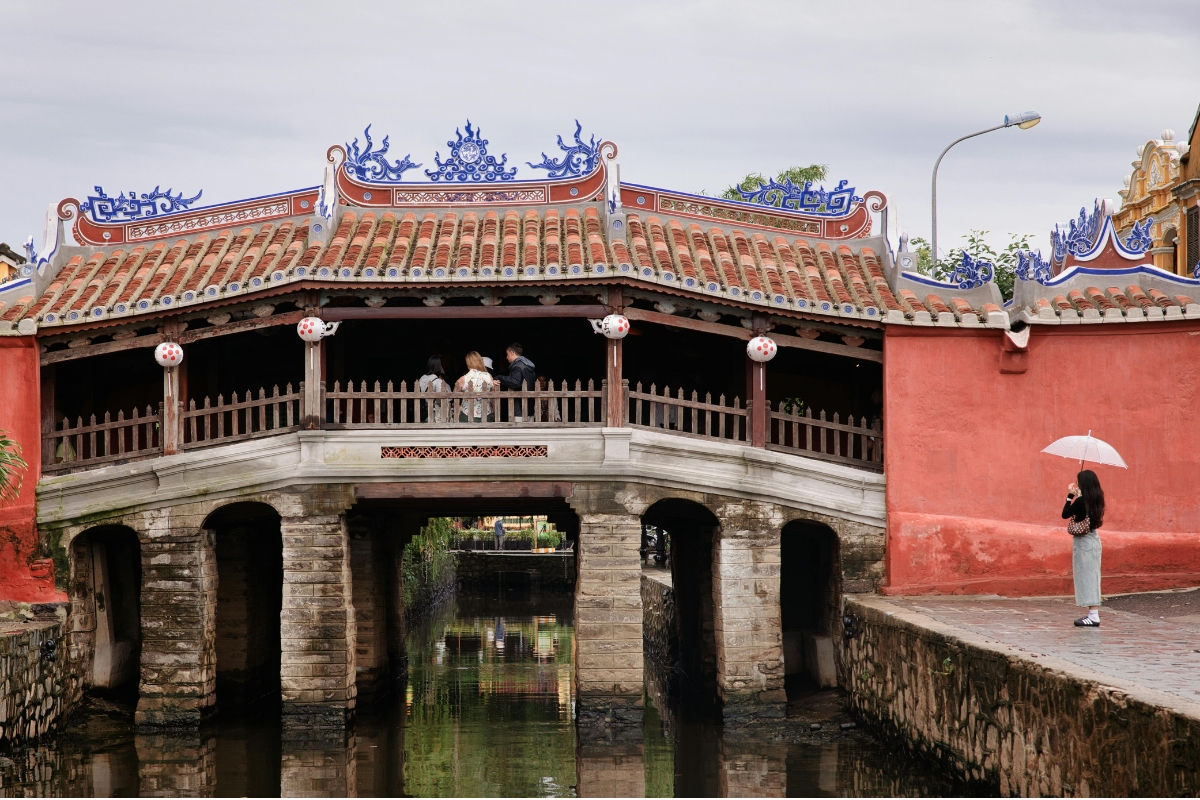
The Story Behind The Japanese Bridge
Visit The Japanese Bridge In Hoi An
When is the best time to visit the Japanese Bridge?
- Visit early in the morning: The quieter morning hours are ideal for appreciating the bridge with fewer visitors and softer light, especially if you want time to take photos.
- Stay into the evening: Hoi An’s lantern-lit streets create a different atmosphere after sunset. The Ancient Town’s pedestrian area operates until 9:30 PM in summer and 9:00 PM in winter, giving you time to explore the bridge and surrounding streets.
- Plan around cultural activities: Japanese tea ceremony performances take place at 9:30 AM and 4:30 PM daily, while traditional art performances are scheduled at 10:15 AM, 3:15 PM, and 4:15 PM. These can be combined with a visit to the bridge for a broader cultural experience.
Look for the temple inside the bridge
One of the Japanese Bridge’s most distinctive features is the small shrine built into the covered structure. Despite commonly being called a “pagoda”, it is not a Buddhist pagoda but a shrine dedicated to Bac De Tran Vu, a Taoist deity associated with protection and the control of floods. Look closely at the entrance, and you will also find statues of a monkey and a dog, which are traditionally believed to guard the bridge. The unusual decorative details reflect the blend of Vietnamese, Chinese, and Japanese cultural influences found throughout Hoi An.
Experience The Heritage Of Hoi An At Wafaifo Resort Hoi An
Wafaifo Resort Hoi An brings the essence of Hoi An’s iconic Japanese Bridge into the resort with a carefully crafted replica in the lobby. Designed as more than a photo backdrop, the feature gives guests a closer connection to one of Hoi An’s most recognisable heritage icons without leaving the resort. Guests can also rent a traditional Ao Dai and pose with the bridge, turning the experience into a memorable cultural moment.
Beyond the Japanese Bridge replica, Wafaifo offers:
- Stay close to Hoi An’s heritage: Wafaifo Resort Hoi An is located just 1.2 km from Hoi An Ancient Town
- Follow the Heritage & Culture Pathway: The resort’s Heritage & Culture Pathway features 13 terracotta murals inspired by Hoi An’s history, traditional crafts and local culture, with a replica of the Japanese Bridge as one of its highlights.
- Enjoy six dining experiences: Wafaifo brings six F&B venues together on the property, covering Vietnamese cuisine, charcoal-grilled specialities, coffee, wine, tapas and poolside dining.
- Relax by the temperature-controlled saltwater pool: The 25 × 6 m pool offers a comfortable space for swimming and downtime throughout the year, with Swim City Cafe right beside the pool.
- Enjoy a private cinema experience: The resort’s Cinema Room accommodates up to eight guests, offering an intimate space for a private film night or a relaxed group experience.
If you want to experience Hoi An’s heritage while staying somewhere that brings its culture, wellness and leisure together, make Wafaifo Resort Hoi An your base and discover the city’s iconic Japanese Bridge for yourself.